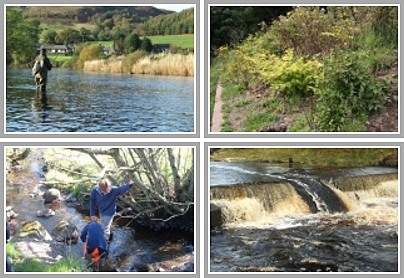
Earlier this year we undertook quite an extensive section of green engineering on the River Doon near Waterside. This is work that is being funded by the Wild Fisheries Fund and the Doon District Salmon Fishery Board.

The middle reaches of the River Doon, between Patna and Dalmellington. This meander had been eroding rapidly, threatening to continue all the way through the bank. Erosion is a natural component of river systems but in this instance has been exacerbated by the lack of riparian woodland that would once have existed before sheep and cattle grazing became so ubiquitous across our landscape. It’s hard to fully understand just how deleterious an effect grazing has had on our watercourses as there are no photographic records dating that far back.
The aim of this work is to reduce the siltation of highly productive salmon spawning grounds in the immediate areas around the erosion. Follow this link to our YouTube page to see salmon spawning on redds around the meander. The river between Dalmellington and Patna is lowland in its character as it meanders through a low gradient section of the valley. It is also largely lacking tree or shrubs on the banks and where the river meanders there are large areas of erosion that contribute to the silt loading of the river. Silt, as frequent readers will no doubt be bored of reading by now, depresses water quality as nutrients are bound to the soil that increase the nutrient status of the water – this can lead to greater weed and algal growth. Silt will settle out on spawning gravels inhibiting the free flow of oxygen that is critical to the development of salmon and trout eggs. It also acts like ‘glue’, ‘concreting’ the bed of the river making it difficult for fish to excavate a redd in which to lay the eggs. And if you’re a landowner, your land is disappearing down the river and that’s undesirable to say the least! So in tackling these issues, we are ticking boxes for ecology and land management.
-
- The situation before we began the engineering. The exposed bank has been retreating steadily for many years and would eventually cut through the meander.
The lack of trees and shrubs is typically driven by livestock access as they will freely browse anything that pokes it’s head above the grasses. This is why fencing then becomes rather critical for establishing tree cover but beside a river fences can be prone to damage during spates. Fencing is also hugely expensive and nobody wants to see an asset damaged or incur the repair bills but often fencing is critical to establishing tree cover. In smaller burns, flood damage is less of an issue but on mainstem rivers it’s a major consideration when it comes to siting and specifying the type of fence.
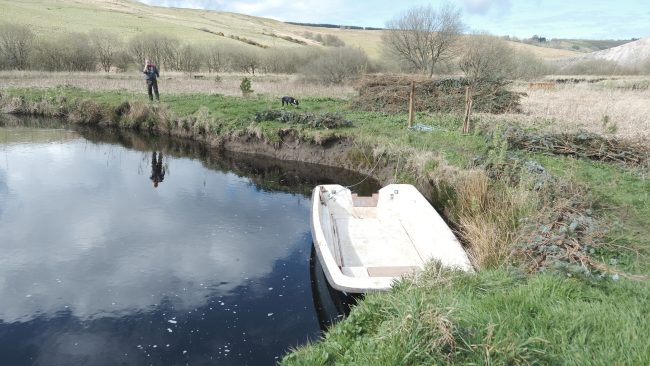
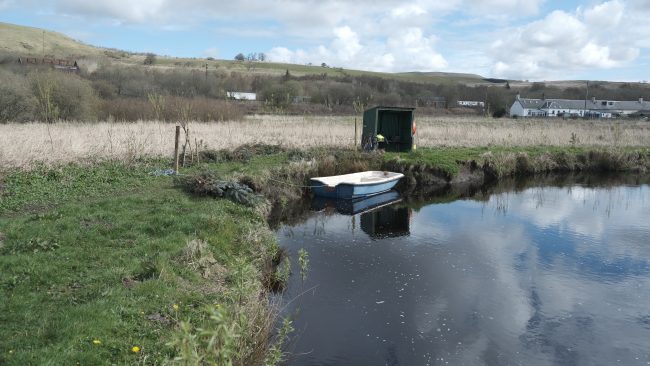
On the Doon at our site, there is no access for livestock so there is no pressure from animals but it is a very difficult site to work on due to the depth of water and the sheer banks. This really left us with one way of working and that was from a boat. Fortunately we have a large, heavy, flat bottomed boat that would provide a stable platform for moving the brash bundles, willow stakes and the petrol post driver we use for securing posts into river banks – swinging mells is a thing of the past for us! This was the first time we had used a boat to help install green engineering in a situation like this and whilst it carries some extra health and safety conderations it was a very successful operation and we made good progress using this technique.
-
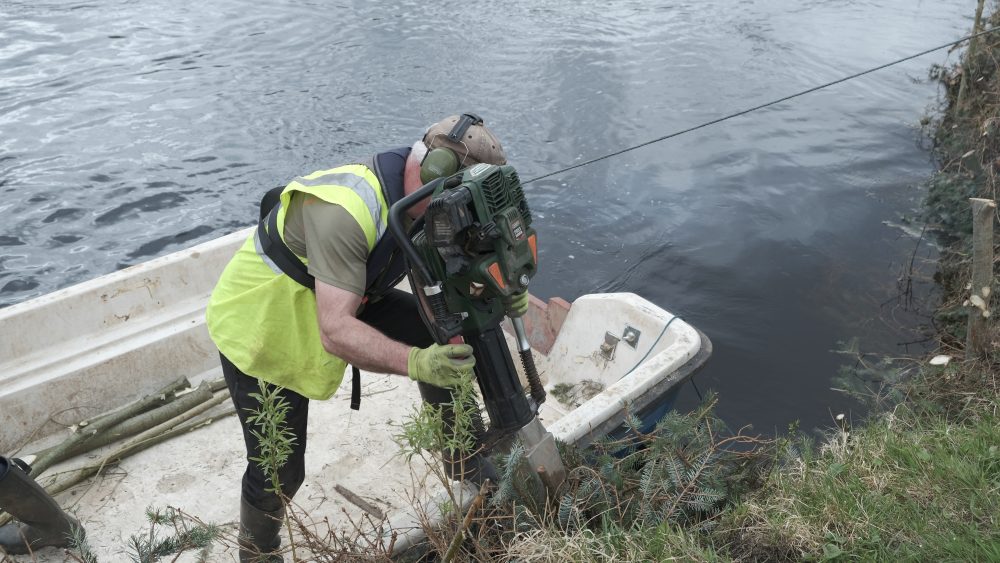
- Accessing the banks here was tricky and a boat really was the only option.
-
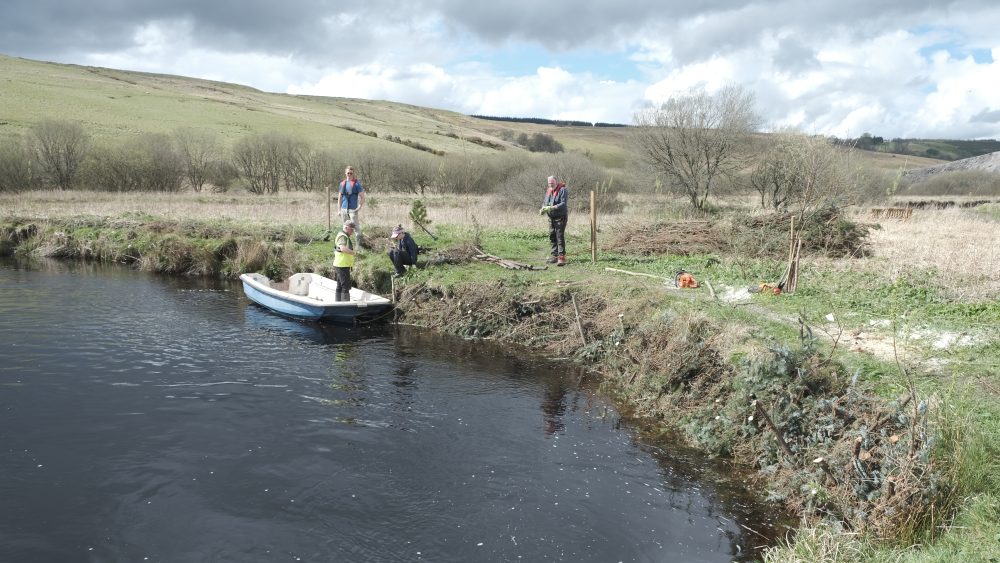
- Progress!
These projects where we are using brash bundles are very material intensive and procuring enough material and building the bundles takes days of time for quite a few people. Then the material has to be transported onto site ahead of doing any work. The installation of the bundles is quick in comparison to the prep’ work. We had around a week of material gathering and bundling before we were able to make a start to the installation. One of the trickiest operations was hauling the boat back out of the river as its a very heavy craft. It requires bodies to manoeuvre and hold the craft in position whilst a pair work together on the boat to position the bundles and secure them in place.
-
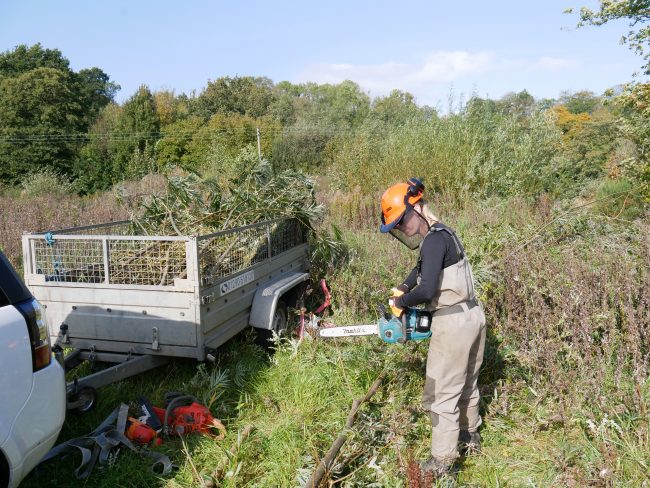
- With each brash bundle requiring 3 stakes to secure it into the bank and around 100 bundles were used here there is a huge volume of material required to take jobs like this on.
-

- Building bundles is time consuming and requires alot of material but makes a good job for volunteers to assit with. Here, one of our trustees Allan helps Jennifer prepare another bundle.
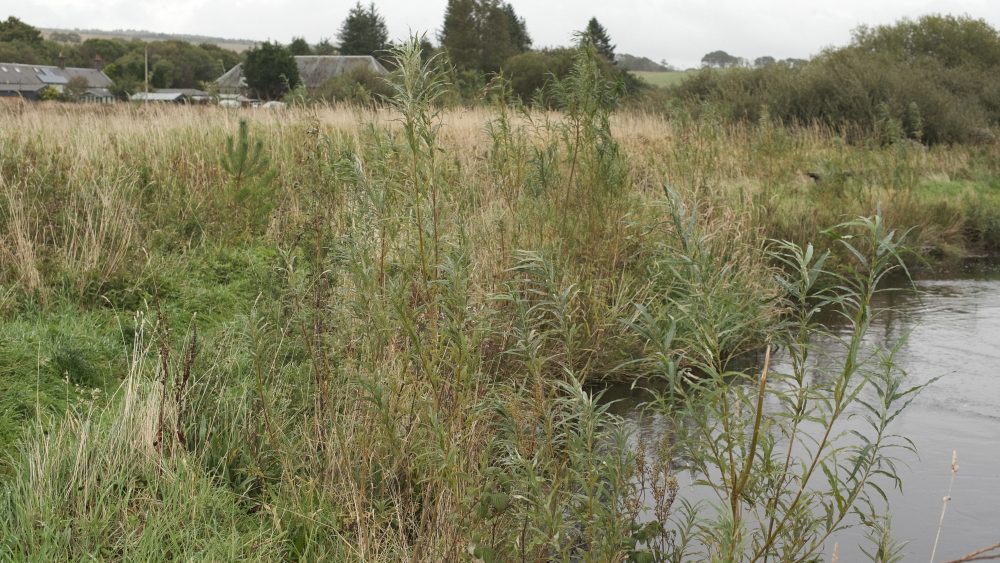
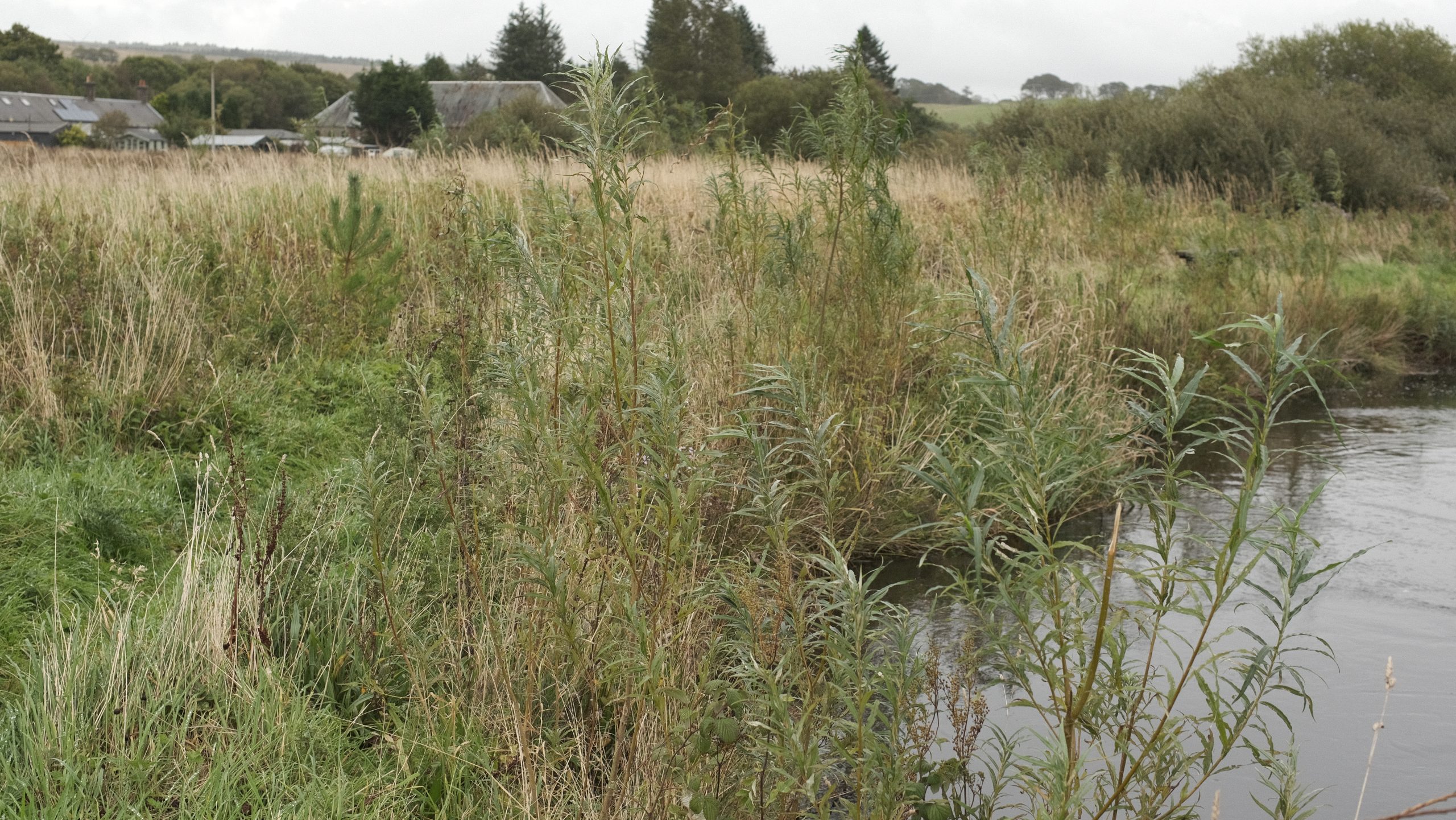
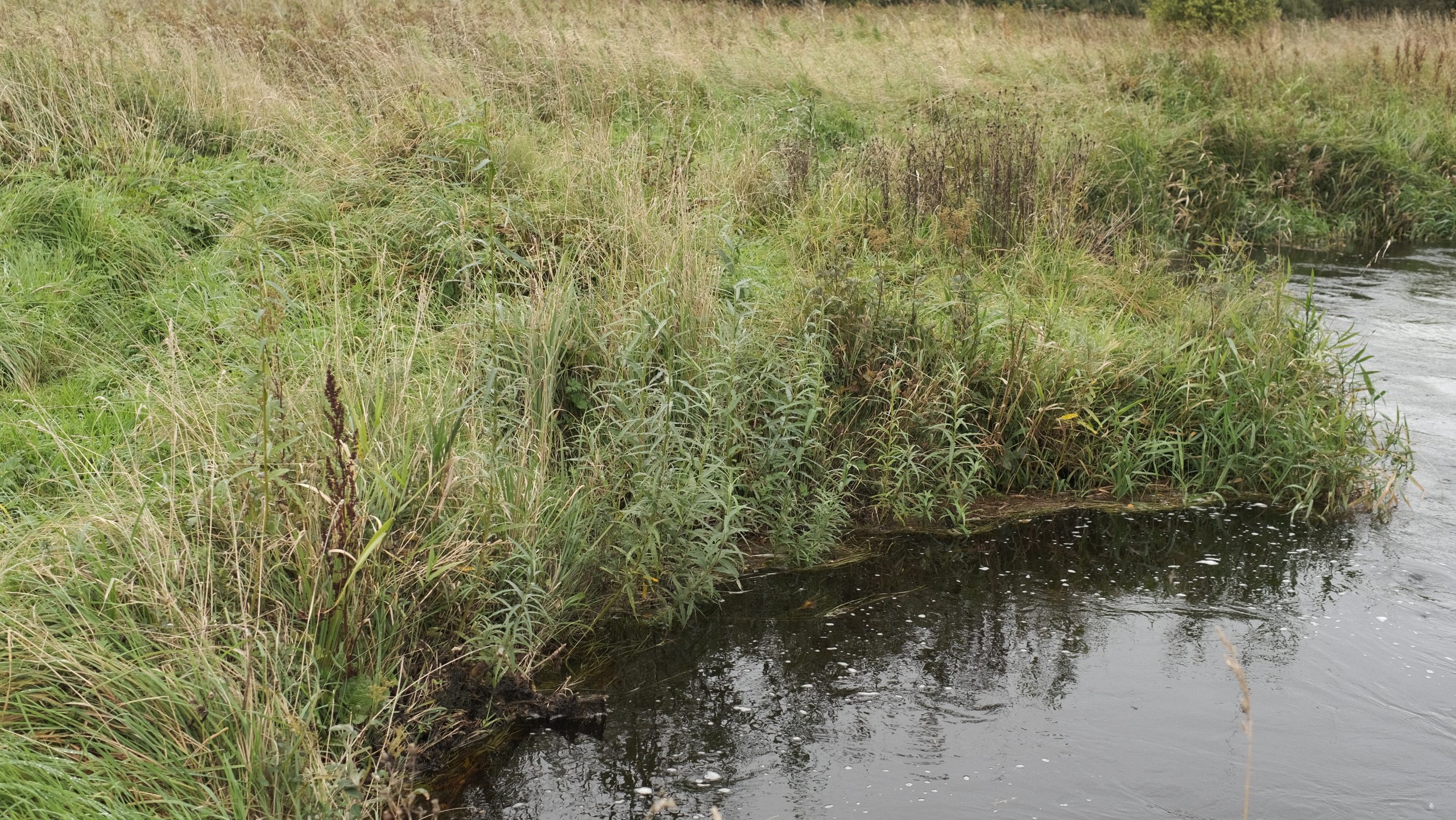
The installation of the green engineering we carried out in early spring to give the materials the best of the growing season to ‘bed in’ and establish good roots before going into the more spate prone winter. We’ve kept an eye on the progress over the summer and have been very pleased with the progress at the site but haven’t reported on the project publicly until now. We still have more that we are trying to accomplish here and are working to secure landowner agreement to carry out some more engineering on the neighbouring bank to halt all erosion from this area. There is also a tree planting element to come this winter to try and bring some much needed shade and stability to other key locations in this area. The slow moving water has greater heating potential as it’s exposed to the sun for longer although this is a largely deep section of river, making it quite a heat sink.
-
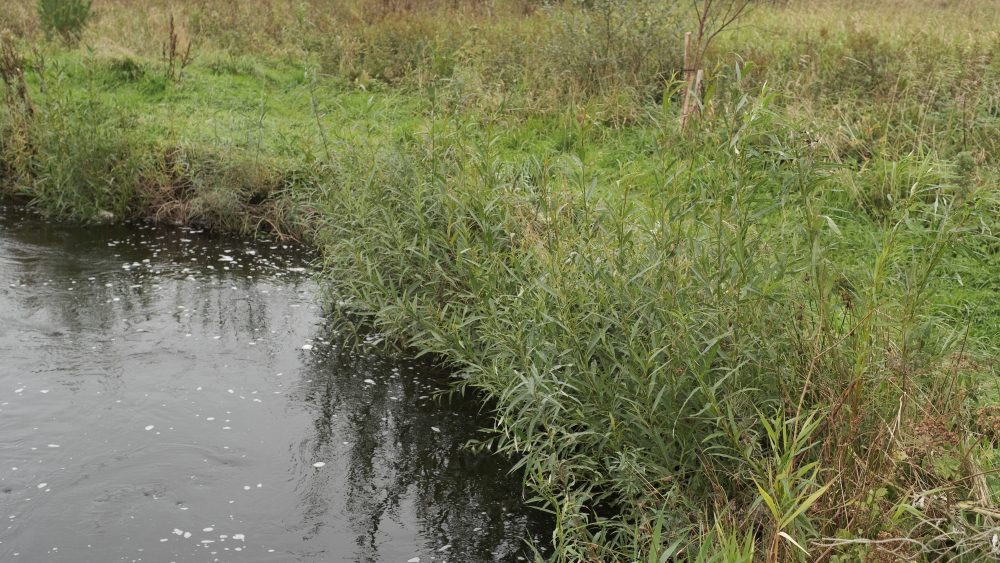
- September 2026
-
- September 2026
-
- September 2026
-
- September 2026
The willow has grown well and whilst this might be a hinderance to anglers it can be cropped down to allow easy access to the fishing. After a seasons growth there will be good root development which is the critical aspect of the establishment heading into winter. These projects are ideally carried out early in the year to give the maximum amount of growing time to the plants ahead of the winter and the spates that will envitably test the structure!
-

- The way that the erosion is nicking back can clearly been seen here. Members of the angling club have been planting willows into the exposed banks and whilst this is a step in the direction the banks really needed something more extensive and robust to reduce the erosion and prevent any more loss of ground.
-
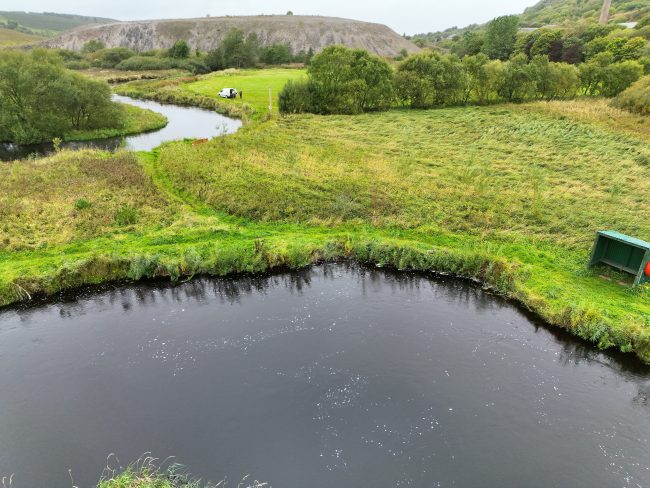
- A growing season on and the willow stakes and brash bundles have settled in well and have stopped any further cutting back. This will be reducing the levels of sediment entering the river and fouling the nearby spawning redds.