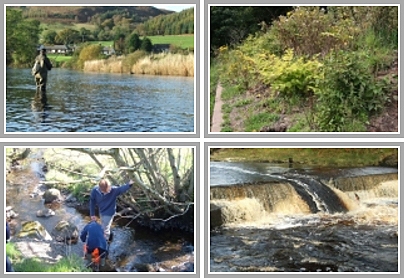
Last month we were invited back on to the Farming and Water Scotland Podcast to discuss Invasive Non-Native Plant (INNPS) control across Ayrshire. The link to this conversation is available at https://www.farmingandwaterscotland.org/resource/what-can-be-done-to-help-reduce-invasive-species/
This is the fourth time we’ve been invited to speak with Farming and Water Scotland/Farm Advisory Service over the last few years and we’re always pleased to sit down for a discussion around how we can make improvements to the water and riparian environments that so many species depend on. Invasive species are still a huge problem and threat to our watercourses and we are working on two substantial projects tackling Japanese knotweed and giant hogweed.
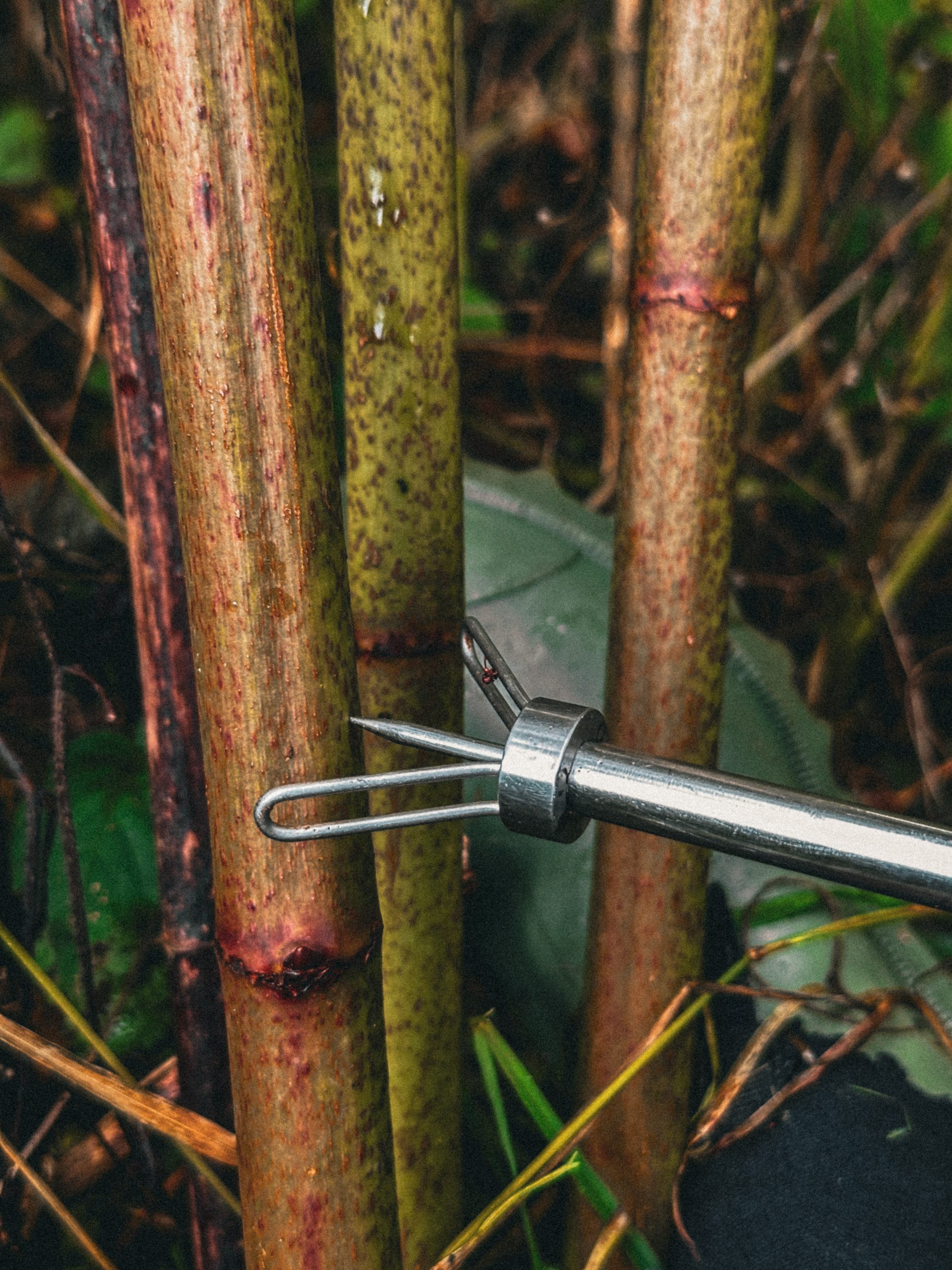
stem injecting Japanese knotweed is a very laborious treatment method but is much more effective than spraying in our experience.
This year we completed our 18th year of giant hogweed control on the River Ayr and its tributaries which sees ART staff tackling GHW through a combination of spraying and stem injection over approximately 140miles of river banks. On the River Stinchar we are working with the District Salmon Fishery Board to tackle Japanese knotweed which has taken over large sections of river bank across the catchment. This work is being funded by the Stinchar DSFB and Carrick Futures and we are very grateful to Carrick Futures for supporting this multi-year project.
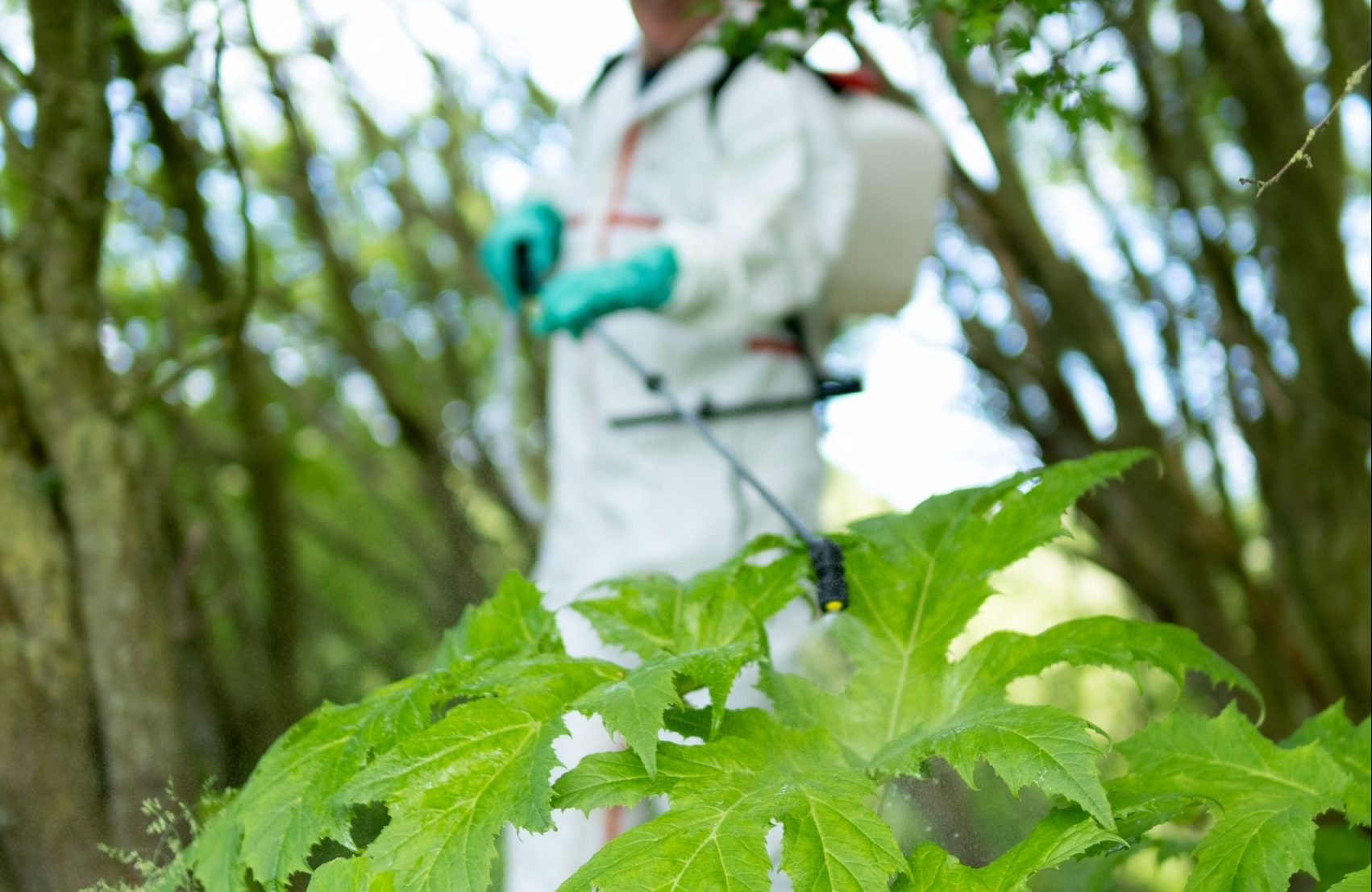
spraying a young giant hogweed plant.
We are coming to the end of the season for these control strategies but we will be posting updates about this work over the coming months, currently we’re maximising our time in the field to finish electrofishing work and Japanese knotweed control before weather and temperatures prevent us from doing anymore.